Royal Borough of Greenwich · Product Designer · 2025
From bureaucracy to simplicity: a transactions platform for Greenwich
Designing a new transactions platform for the Royal Borough of Greenwich to make online services easier to complete for residents and faster to process for staff.
Context
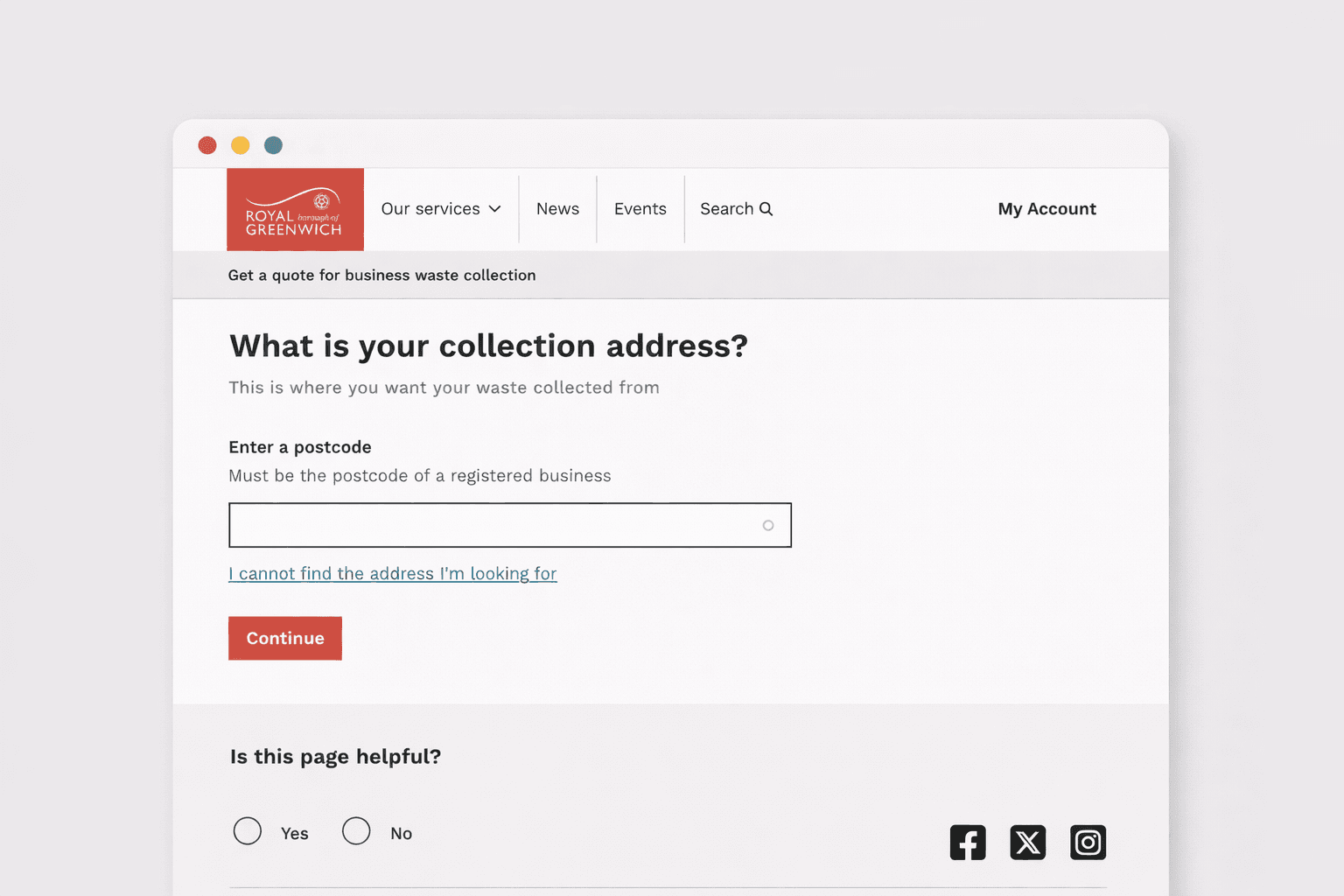
Local councils across the UK face increasing financial pressure, making efficient digital services essential. Transactions such as requesting services, getting quotes, and making payments are key touchpoints for residents, yet many still rely on outdated systems and manual processes.
At the Royal Borough of Greenwich, modernising digital transactions became a strategic priority: not only to improve individual services, but to create a scalable platform that could support consistent, accessible, and efficient service delivery across the council.
Problem
Transactions were delivered through a legacy forms CMS that was slow, difficult to use, and poorly integrated with backend systems. Residents experienced confusing journeys and low trust in online services. Staff faced manual processing, duplicated work, and inconsistent data.
Challenge
How might we design a simple, secure, and scalable transactions platform on LocalGov Drupal that works for residents, staff, and the organisation?
Approach
I applied two perspectives across overlapping workstreams:
Zooming in
Design thinking: designing clear, accessible online forms grounded in user needs.
Zooming out
Systems thinking: shaping the wider platform through strategic improvements and the design system.
Zooming in
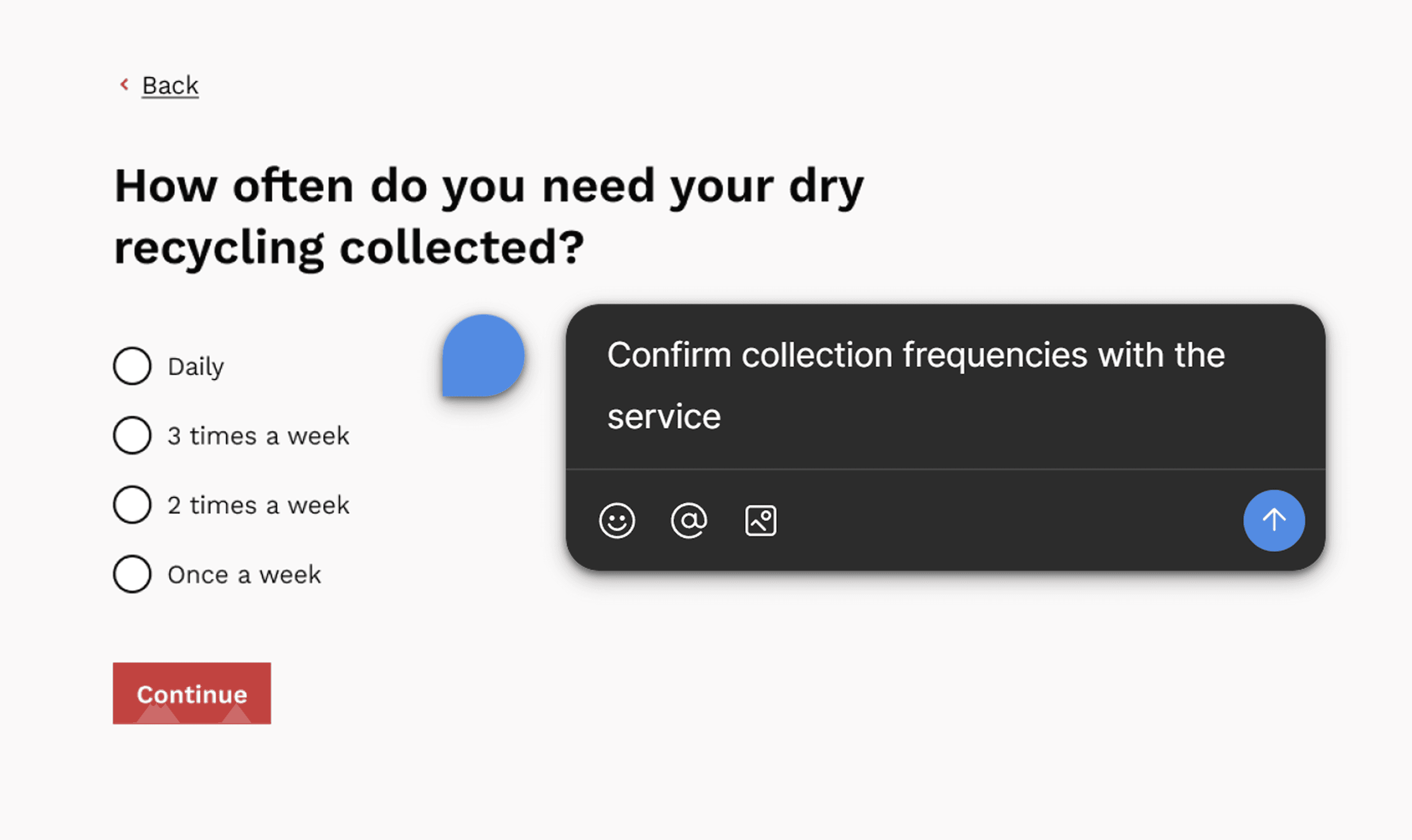
Designing the ‘Get a quote for business waste collection’ form
Replacing manual requests and offline calculations with an instant digital quote journey built on the new transactions platform.
Discovery
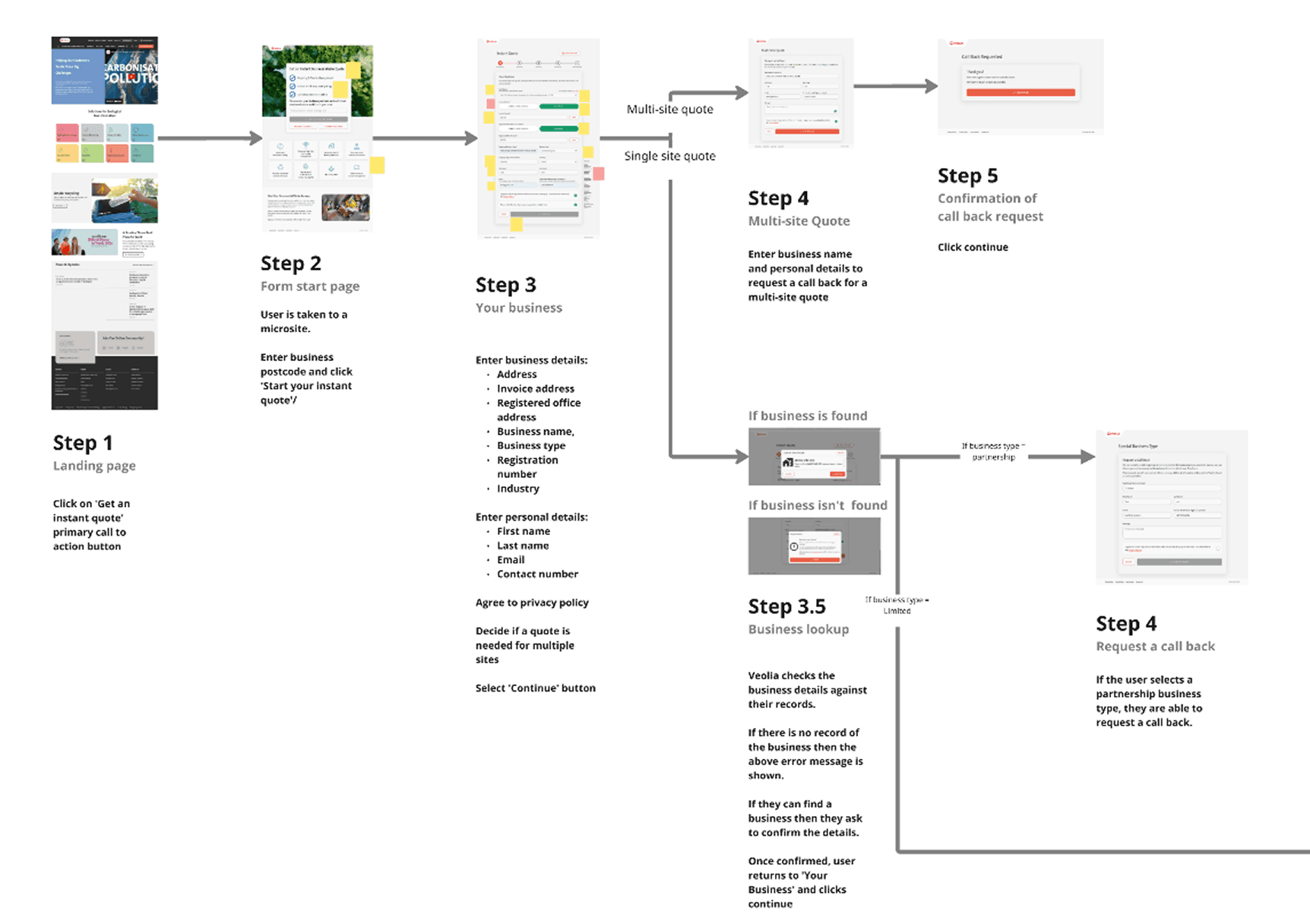
Exploratory workshops and desk research mapped the current service, identified pain points, and shaped a proposed digital user flow.
Prototyping
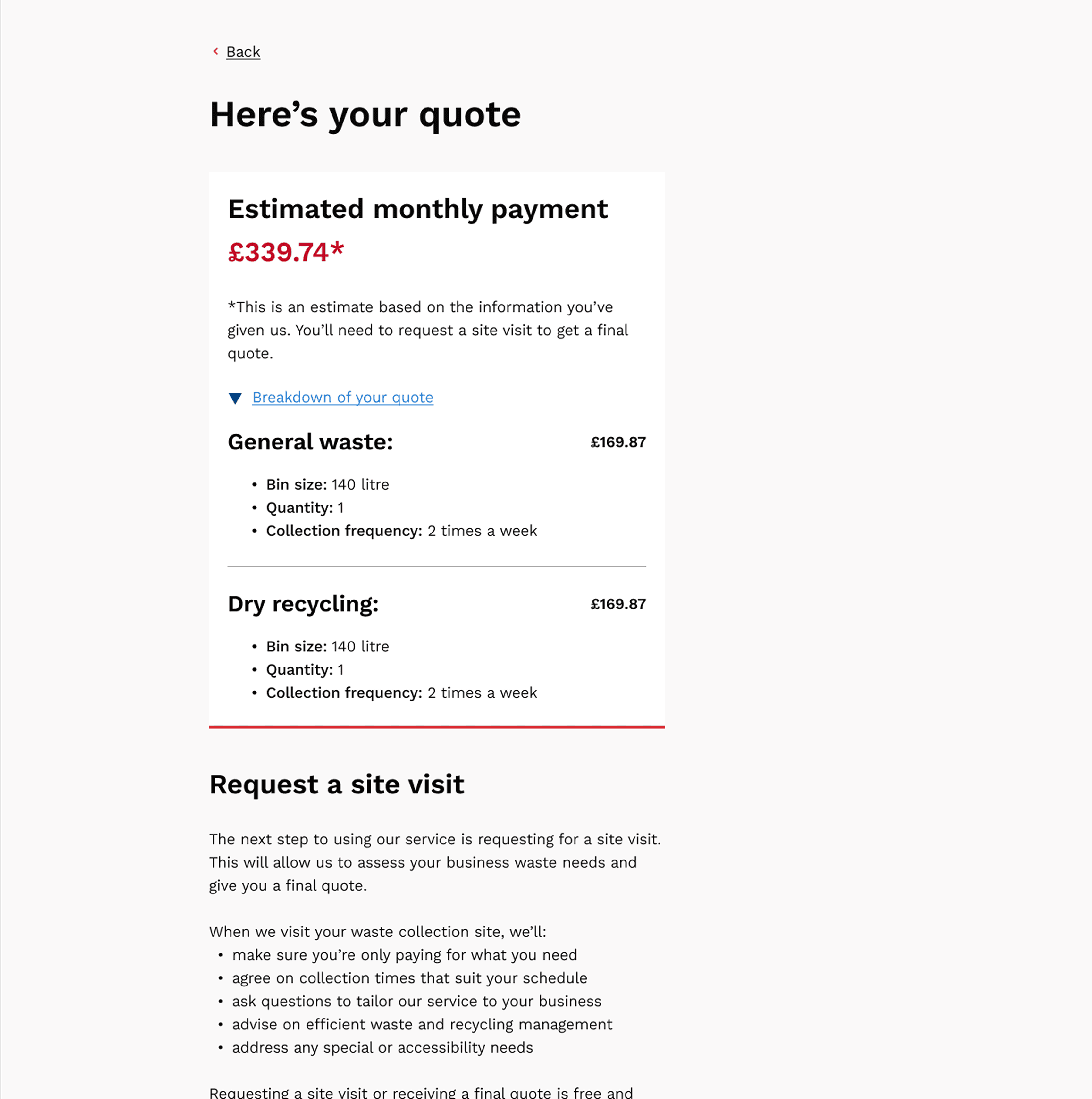
Prototyped the journey and created reusable form components, working with a content designer to ensure clarity.
Testing
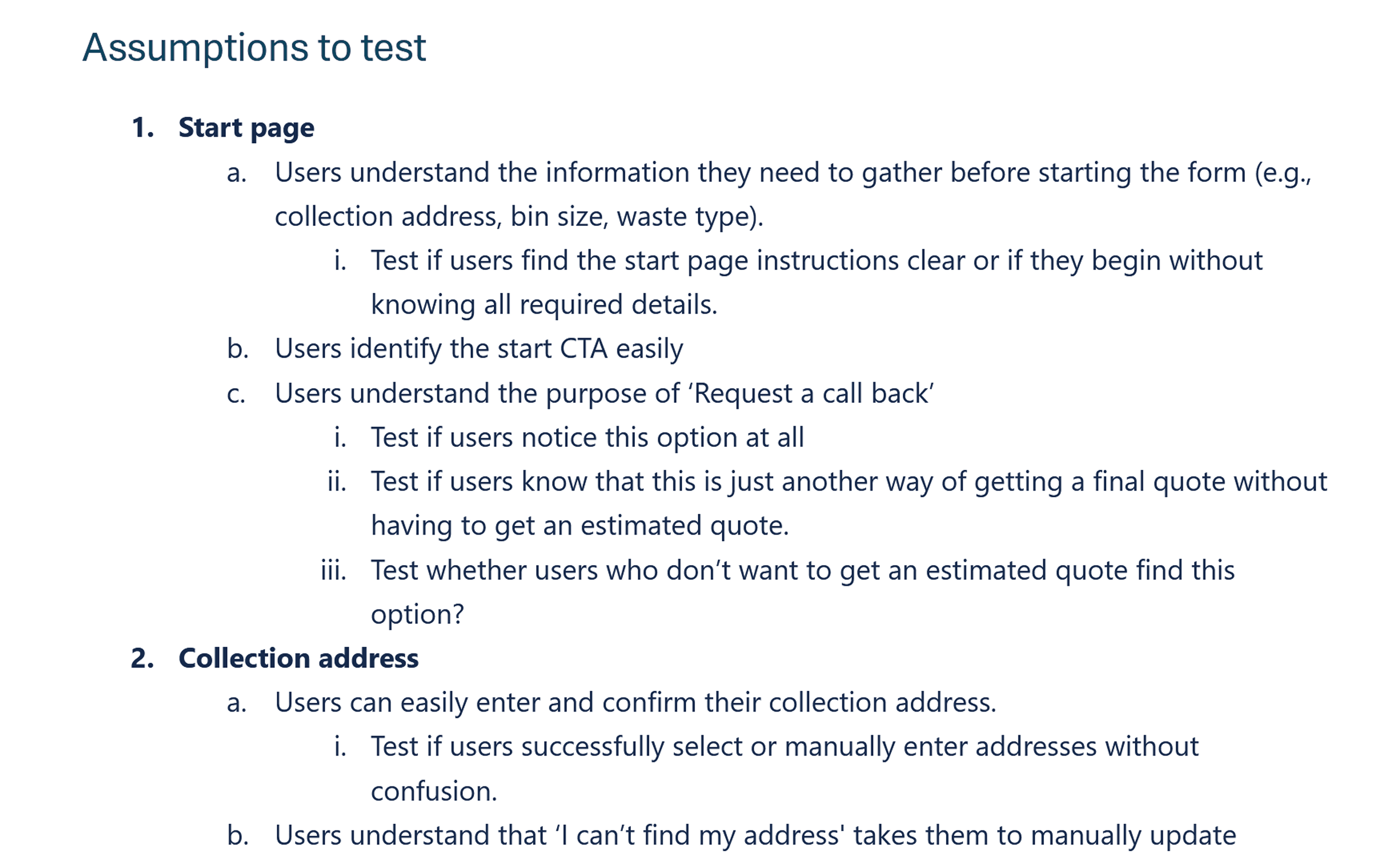
Transferred the prototype to our Drupal dev environment to realistically test usability and validate assumptions.
Iteration
Weekly design reviews with the service let us play back findings from testing and iterate in the open.
Zooming out
Improving the platform through systems thinking
Weekly design crits surfaced recurring usability, accessibility and scalability issues; prioritisation workshops focused the team on embedding scalable change through the design system.
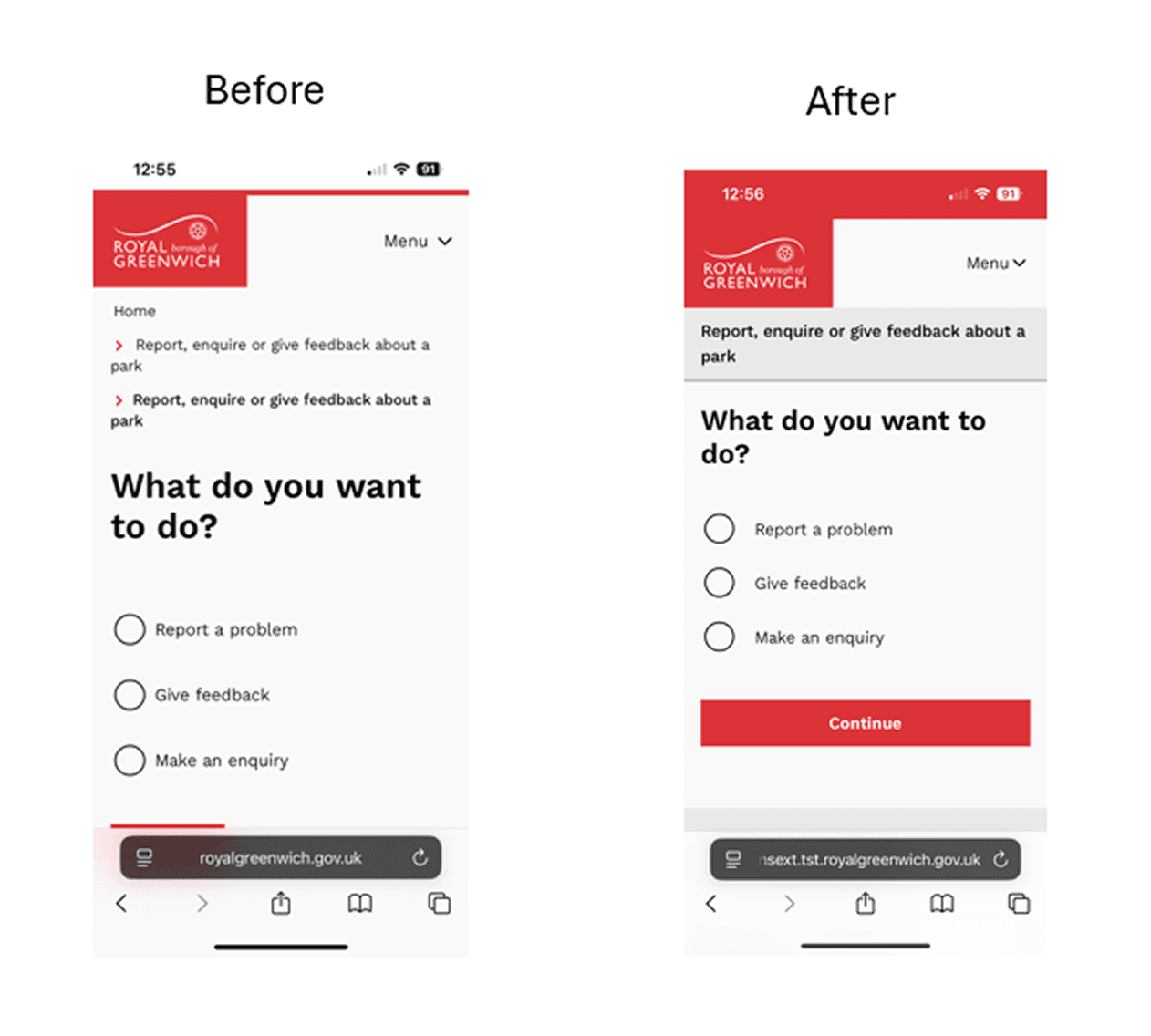
Spacing
Tighter spacing, reduced heading sizes and a new service navigation component replaced breadcrumbs for a more compact UI.
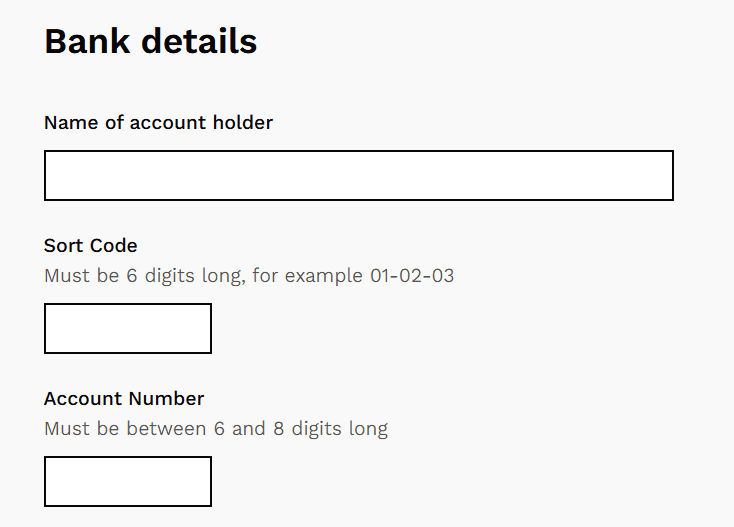
Form components
Introduced reusable building blocks like bank details inputs and flexible field widths for consistent services.
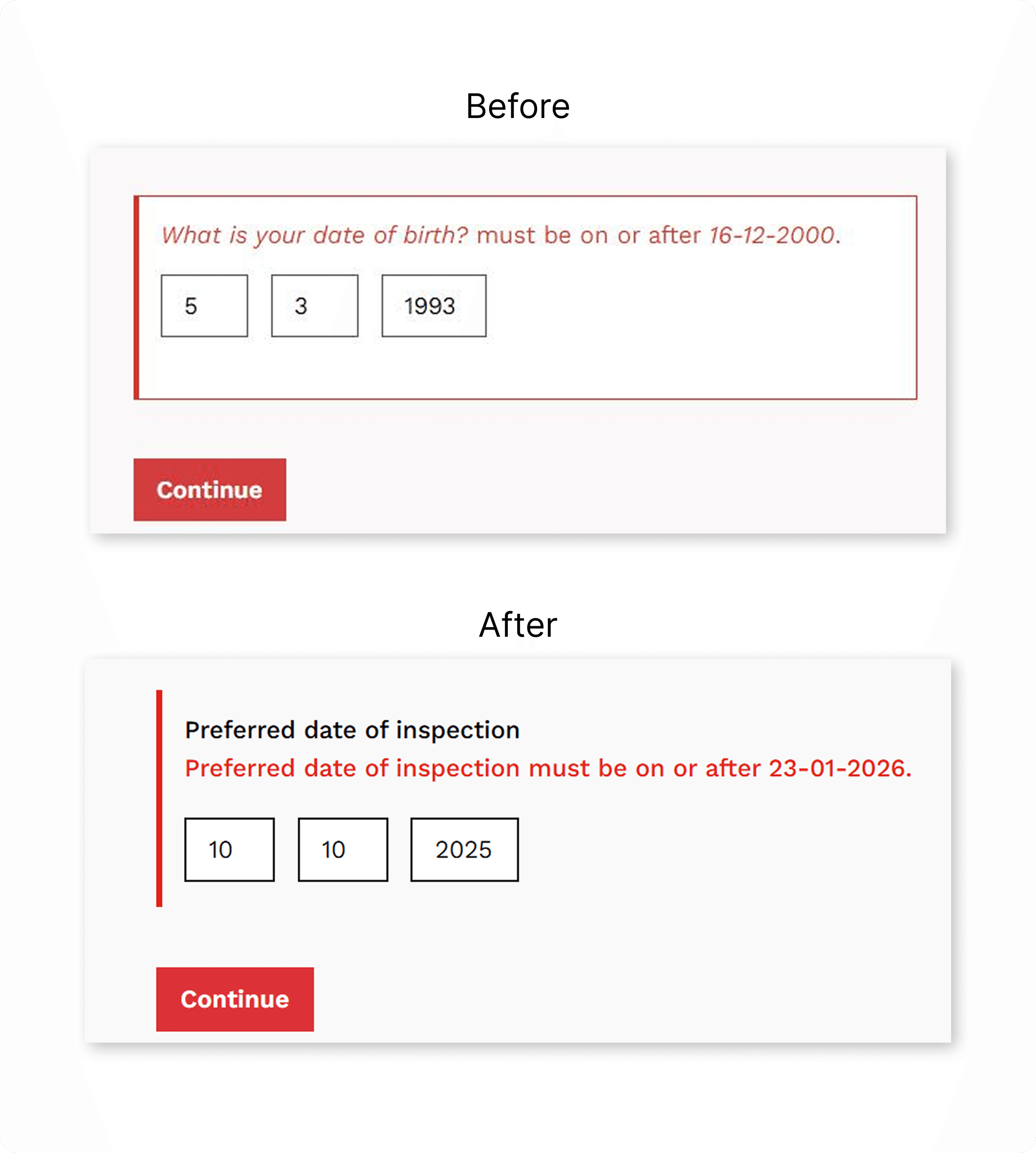
Error states
Standardised error summaries, inline messages and field states to reduce confusion and clarify recovery.
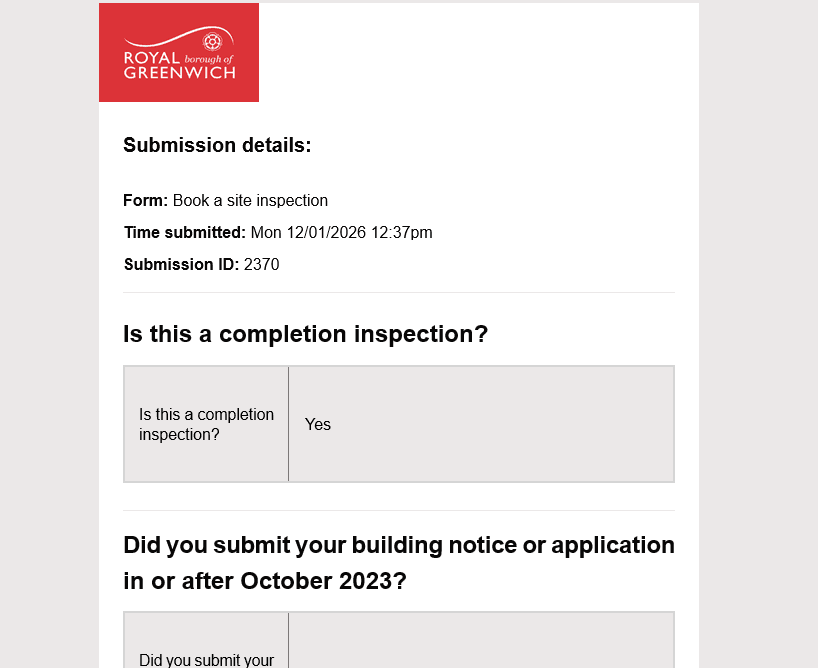
Internal email template
Updated internal confirmation emails for staff with clearer subject lines and structured summaries.
Outcome
- Delivered a streamlined garden waste quote journey, improving usability and reducing manual processing.
- Established a scalable transactions platform supporting multiple high-impact services.
- Embedded accessibility, consistency and reusability through the design system.
- Created a continuous improvement loop driven by real service insights and strategic prioritisation.